Blog Post
E-sign, what does it mean?
The "e" symbol, often overlooked but highly significant in product packaging, plays a crucial role in conveying essential information to consumers and regulatory bodies. Representing the estimated quantity of a product, this symbol ensures transparency and accuracy in packaging. For manufacturers, understanding the implications of the "e" symbol is imperative, as it not only complies with legal requirements but also establishes trust with consumers. In this introduction, we will delve into the significance of the "e" symbol, exploring its importance in providing clear and standardized information about product contents.
E-sign
Estimated sign
The "e" symbol on packaging, often seen as "e" followed by a number, is known as the "estimated sign" or "estimated quantity symbol." It is a marking used in the European Union and some other countries to indicate that the quantity of a product inside the package has been estimated to meet a specified net quantity. This symbol is typically used for pre-packaged food products and ensures that consumers receive at least the quantity of the product stated on the packaging.

For example, if you see "e 500g" on a package of flour, it means that the contents of the package have been estimated to be at least 500 grams. It provides a level of assurance to consumers that they are getting the amount of product they expect when they make a purchase.
Legal Requirements
Legal Requirements
The "e" symbol is a legal requirement in many countries to prevent underfilling of products and to protect consumers from receiving less than what is stated on the packaging. It is one of the many labeling and packaging regulations that help ensure transparency and accuracy in product labeling.
Directive
Council Directive No 76/211/EEC
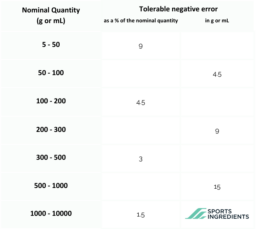
According to council directive No 76/211/EEC, the E-sign may be used on products between 5 g or mL and 10 kg or L.
Requirements of the E-sign:- the actual contents shall not be less, on average, than the nominal quantity- the proportion of prepackages having a negative error greater than the tolerable negative error shall be sufficiently small for batches of prepackages to satisfy the requirements of the tests- no prepackage having a negative error greater than twice the tolerable negative error may bear the EEC sign

Conclusion
So, what is the “e-sign”?
In conclusion, the "e" sign is a valuable tool in ensuring transparency and accuracy in product packaging. By understanding its meaning and the regulations surrounding its usage, manufacturers can foster trust with consumers and adhere to legal standards. It ensures that consumers are getting at least the quantity of the product stated on the packaging, contributing to a fair and honest marketplace. As consumers, being aware of such symbols and their significance can enhance our shopping experience, enabling us to make informed decisions. Contact us if you want to know more.
Related Products
How to read extract ratios?
Misunderstandings on what plant-to-extract ratios signify are common. These ratios are often thought to indicate the amount of active ingredient present or the purity of the extract. These are both common misinterpretations of plant-to-extract ratio’s. This blog post will tell you more about what these plant-to-extract ratios actually mean.
Protein content determination: is it always accurate?
Products containing protein are required to list the protein content on their nutritional labels. The determination and calculation of this protein content are commonly performed using the Kjeldahl method. This method measures the amount of nitrogen in the product to estimate its protein content. This blog will explain the Kjeldahl method and assess its accuracy.
Gastro-resistance explained
Nowadays dietary supplements are occasionally labelled gastro-resistant. Often the question arises what does gastro-resistant mean and what is it good for? This blog will give more insight into gastro-resistant supplements and their benefits.
Private Label Clear Vegan Protein
We are happy to unveil our latest product innovation – Clear Vegan Protein, designed to meet the evolving demands of the health and wellness market. This formula offers a refreshing and customizable alternative to traditional plant-based proteins, making it an ideal addition to your product lineup. Need help to kickstart your next Private Label Clear Vegan Protein? Let us help you to produce it.
Sweeteners for Sports Nutrition
Nowadays a lot of different non-nutritive sweeteners are available like sucralose, stevia, acesulfame K, and aspartame. As a manufacturer of sports nutrition it is important to be well-informed on which sweetener to use.
Labelling Requirements for Sports Nutrition
In the fast-paced world of sports nutrition, where performance and precision are paramount, it is critical to understand the importance of regulatory compliance and transparency. Whether you're a manufacturer, distributor, or retailer of sports nutrition products, adhering to precise labelling requirements is not only a legal obligation but also a key component of maintaining the trust and loyalty of your customers.
Heat Stability of Proteins in Sports Nutrition
Proteins, the building blocks of life, undergo a fascinating transformation when exposed to heat. As a manufacturer, understanding the heat stability of proteins adds a layer of knowledge that can be important in Sports Nutrition.